
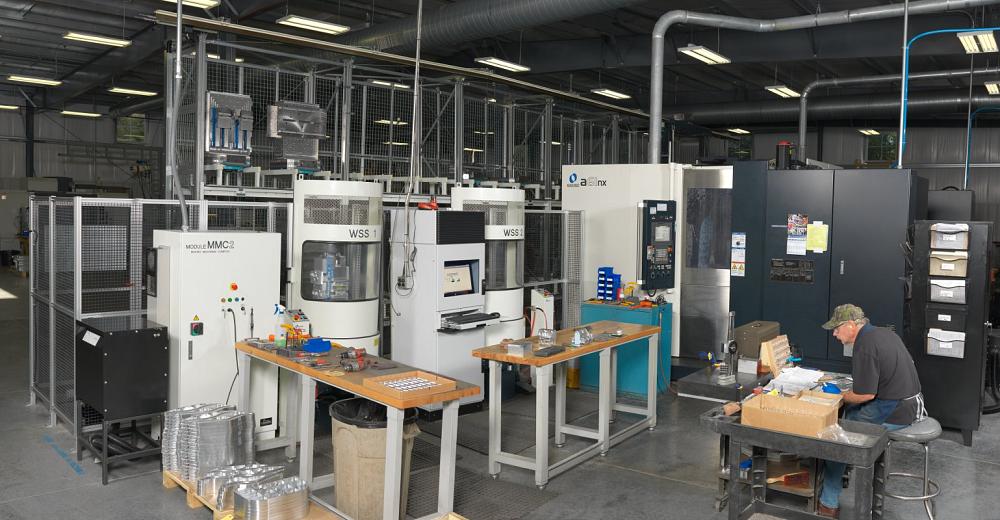
Precision machining has always been a cornerstone of modern manufacturing, enabling industries such as aerospace, automotive, medical, and electronics to achieve exceptional accuracy and consistency in component production. But today, the expectations for speed, repeatability, and cost-efficiency are higher than ever. This rising demand has driven precision machining manufacturers to adopt advanced automation systems. Automation is no longer an experimental upgrade—it has become a strategic necessity. With global competition intensifying and production timelines shrinking, manufacturers are leveraging robotics, AI-driven systems, and smart machinery to optimize workflow efficiency and eliminate avoidable errors. The shift is not merely about replacing manual tasks, but about elevating the entire machining ecosystem to ensure long-term competitiveness and resilience.
One of the primary reasons automation has gained traction in precision machining is its ability to drastically improve production consistency. Manual machining, while skill-intensive, is subject to variability in operator technique, fatigue, and environmental distraction. Automated CNC systems, however, maintain continuous high-precision operation regardless of workload or duration. Automated tool changers, robotic arms for part handling, and integrated quality-control sensors ensure every component meets exact tolerances. This level of consistency is essential for industries where even microscopic deviations can compromise safety or performance. Moreover, automation supports around-the-clock production without the limitations of human shift schedules, enabling manufacturers to scale output without sacrificing accuracy or reliability.
Automation has also become indispensable for reducing operational costs. While the upfront investment in robotics, sensors, and smart CNC systems can be significant, the long-term financial benefits far outweigh the initial expense. Automated machining minimizes scrap rates by improving precision and ensuring real-time error detection. Predictive maintenance algorithms reduce machine downtime by identifying potential failures in advance. Furthermore, automation optimizes tool life, spindle performance, and energy consumption, resulting in long-term sustainability and cost savings. Manufacturers are increasingly discovering that automated systems not only cut labor-related costs but also increase margin per component due to improved efficiency and reduced material waste.
Another factor influencing the rapid adoption of automation is the growing shortage of skilled machinists. Across many regions, fewer young professionals are entering the manufacturing field, creating an industry-wide skills gap. Automation provides a practical solution by enabling experienced machinists to supervise and optimize processes rather than performing repetitive manual operations. This transition elevates the role of machining professionals, turning them into system operators, programmers, and quality controllers. As a result, manufacturers can maintain high productivity even with limited staffing. Automation also enables faster onboarding and reduces the need for extensive training, as machines guide much of the process through programmed parameters and integrated sensors.
The integration of digital technology, particularly AI and machine learning, has further amplified the capabilities of automated machining systems. Smart CNC machines can now adjust feed rates, spindle speeds, and cutting paths in real time to optimize performance. Sensors monitor vibration, temperature, cutting forces, and tool wear, allowing systems to automatically compensate for environmental or mechanical changes. This adaptive machining capability dramatically enhances precision while extending tool life. In industries where tolerance requirements become increasingly stringent, automated adaptive adjustments ensure flawless output. Additionally, data collected across production cycles empowers manufacturers to refine processes, forecast demand, and improve long-term operational planning.
Ultimately, precision machining manufacturers are embracing automation to future-proof their production lines. As global competition intensifies and product complexity increases, automation offers the scalability, reliability, and precision needed to compete in a technologically advanced marketplace. From robotic handling systems to intelligent CNC controls, automation elevates manufacturing from a manual, reactive process to an intelligent, proactive ecosystem. The shift also strengthens supply chain resilience by reducing dependence on manual labor and allowing rapid adjustments to demand fluctuations. Manufacturers that invest in automation not only enhance productivity but also position themselves at the forefront of innovation. As the industry continues evolving toward high-precision, high-volume, data-driven production, automation will remain the driving force behind sustainable growth and competitive advantage.