
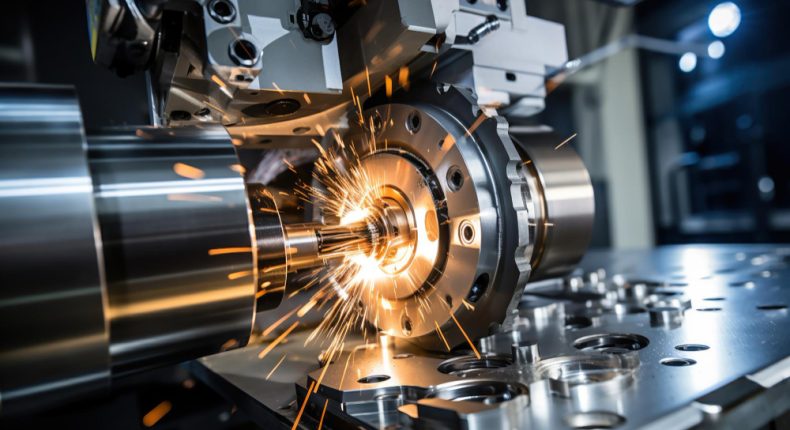
Adaptive machining has emerged as one of the most transformative advancements in modern manufacturing, reshaping how CNC machines respond to variation, maintain accuracy, and optimize performance in real time. Traditional CNC machining depends heavily on preprogrammed toolpaths that assume workpieces, fixtures, and machine behaviors remain constant. However, in real-world production settings, variables such as material inconsistencies, tool wear, thermal growth, vibration, and even subtle fixture misalignments can significantly affect machining outcomes. Adaptive machining addresses these challenges by integrating sensors, intelligent software, and dynamic control algorithms that adjust cutting parameters on the fly. Instead of relying solely on static G-code instructions, adaptive machining equips CNC systems with the ability to “see” and “respond” to actual conditions during operation. This capability not only improves the precision and repeatability of machined parts but also enhances productivity, reduces scrap rates, and supports the manufacturing of complex geometries that were previously difficult or impossible to execute consistently. As industries move toward tighter tolerances and smaller batch production, adaptive machining serves as a critical technology enabling manufacturers to maintain peak performance under unpredictable conditions.
One of the defining characteristics of adaptive machining is its reliance on high-resolution sensors and in-process metrology to monitor real-time machining conditions. These sensors can measure tool forces, spindle loads, vibration levels, temperature shifts, acoustic signatures, and positional deviations in the micrometer range. By capturing data continuously, adaptive machining systems can detect anomalies such as tool deflection, chatter, unexpected material hardness, or shifting of the workpiece. Traditional CNC systems might continue cutting despite these variations, leading to rejected parts or premature tool failure. Adaptive machining, in contrast, alters feed rates, spindle speeds, depth of cut, or even toolpath trajectories instantly to avoid defects. For example, if the system detects excessive vibration during a high-speed finishing pass, the software can automatically reduce feed rate to stabilize cutting conditions while still maintaining acceptable cycle times. Likewise, if the material is softer or harder than expected, the adaptive system can optimize cutting forces to maintain precision without overstressing the tool. This level of responsiveness transforms CNC machining from a static process into a dynamic, self-optimizing operation capable of compensating for the natural variability present in complex manufacturing environments.
Another major advantage of adaptive machining is its ability to extend tool life and reduce tooling costs. Tool wear is one of the most unpredictable and detrimental factors affecting machining accuracy. Traditional machining schedules tool changes based on fixed intervals or visual inspections, but neither method accounts for real-time conditions. Adaptive machining uses sensor feedback to detect early signs of wear or microchipping. Instead of abruptly failing, tools gradually lose sharpness, causing increased cutting forces and dimensional drift. Adaptive systems identify these changes instantly and adjust cutting strategies to compensate. For example, an adaptive system might decrease the feed rate or modify the toolpath slightly to maintain dimensional accuracy despite a partially worn tool. More advanced systems can automatically flag the tool for replacement when performance reaches a predefined threshold, eliminating the guesswork associated with manual tool management. This not only reduces downtime but also ensures that tools are used to their full potential without risking damage to high-value parts. By maximizing tool utilization and preventing unexpected failures, adaptive machining supports more stable and predictable production processes, which is essential for industries such as aerospace, medical devices, and automotive manufacturing where even minor deviations can compromise safety or functionality.
In addition to improving accuracy and tool life, adaptive machining enhances production efficiency by streamlining workflows and reducing the need for secondary inspections. In traditional machining environments, parts often undergo manual measurement between operations or after completion to ensure tolerances are met. These steps slow down production, require skilled labor, and introduce opportunities for human error. Adaptive machining eliminates much of this manual intervention through in-process measurement and automatic compensation techniques. For instance, optical or laser scanning systems can map the actual geometry of a workpiece before machining begins and adjust the toolpaths to account for casting irregularities or previous machining steps. This capability is especially valuable for high-mix, low-volume production where workpieces rarely conform to an idealized model. During machining, adaptive systems continually measure cutting forces and geometric accuracy, ensuring that deviations are corrected immediately rather than discovered at the end of the process. This reduces scrap, eliminates unnecessary rework, and shortens overall cycle times. For manufacturers facing tight timelines and rising labor costs, the integration of adaptive machining directly contributes to improved throughput and more consistent quality across every production run.
Adaptive machining also plays a pivotal role in enabling the manufacturing of complex components with intricate geometries and variable material conditions. As advanced industries increasingly rely on 5-axis machining for parts with organic curves, internal cavities, and multi-faceted surfaces, maintaining accuracy becomes more challenging due to unpredictable tool contact angles and chip loads. Adaptive machining systems use advanced algorithms to maintain ideal cutting conditions even as the tool orientation changes dynamically. The software can predict tool engagement and compensate for force spikes before they occur, maintaining smooth tool motion and preventing gouges or dimensional errors. In applications like aerospace turbine blades or orthopedic implants, where geometric fidelity is critical, adaptive machining delivers consistent accuracy that static machining strategies simply cannot achieve. Additionally, additive manufacturing hybrid systems benefit significantly from adaptive machining, as 3D-printed surfaces often contain irregularities that cannot be removed using traditional machining programs. Adaptive machining identifies these variations and responds with customized toolpaths, making hybrid processes more feasible and precise for production-grade applications.
Finally, the rise of Industry 4.0 and smart factories has further amplified the importance of adaptive machining, integrating it into broader digital manufacturing ecosystems. By connecting adaptive machining systems with cloud platforms, machine learning engines, and digital twins, manufacturers can analyze historical data, predict optimal machining parameters, and continuously improve operational strategies. Digital twins, for example, simulate real-time machining behavior based on actual sensor feedback, allowing manufacturers to evaluate adjustments virtually before implementing them on the shop floor. Machine learning algorithms can identify patterns of tool wear, vibration signatures, or material inconsistencies, enabling predictive optimization that makes adaptive machining even more accurate and efficient over time. The result is a self-learning manufacturing environment where CNC machines grow smarter with every cycle. This convergence of adaptive machining and digital intelligence not only enhances real-time performance but also creates long-term process stability across entire production lines. As manufacturing continues evolving toward greater automation and data-driven control, adaptive machining stands as a cornerstone technology that bridges physical machining with intelligent digital optimization.
In summary, adaptive machining represents a paradigm shift in CNC manufacturing, enabling real-time adjustments that dramatically improve precision, productivity, and operational resilience. By incorporating sensors, smart algorithms, in-process metrology, and digital connectivity, adaptive machining allows CNC systems to respond dynamically to variations that once caused defects, downtime, or inconsistent part quality. Whether compensating for tool wear, controlling cutting forces, optimizing chip loads, or adjusting toolpaths to match actual part geometry, adaptive machining ensures that every cut is executed under optimal conditions. This innovation not only elevates quality and efficiency but also unlocks new possibilities in machining complex geometries and integrating additive-hybrid processes. As industries face increasing pressure to deliver higher accuracy, lower waste, and faster production, adaptive machining stands at the forefront of modern manufacturing technology, offering a future where CNC adjustments are made intelligently, instantaneously, and with unprecedented precision.